Stillborn Reflections
This is a reflective piece through the eyes of a relatively new funeral arranger and ceremony maker. While I’m surrounded by death and grief every day, something about recent stillborn babes we have had the privilege of caring for has had me reflecting on our roles, society’s role and what we can collectively provide. I write this as part of a process of trying to understand the grief of expecting parents when a child is stillborn. This is only one lens. I understand there are many. All experience their journey in their own way. And not all stillborn children are mourned the same way.
There is real confusion around the language: stillbirth, pregnancy loss, miscarriage, early pregnancy. What is the threshold, gestation or weight? Who gets recorded, and how? And what happens when your baby doesn’t meet the criteria, where does that leave the existence of that child in the official story of a family?

In Victoria, there is a definition used for stillbirth that involves a threshold measured by a medical professional as the baby being 20 weeks’ gestation or 400 grams.In this case a birth must be registered with the BDM, however receiving a birth certificate is optional. The baby's birth is recorded in the permanent record.
Losses earlier than that are generally categorised as being an early pregnancy loss; parents can apply for a recognition of early pregnancy loss certificate - however this is not a legal document and the baby will not be lodged with BDM in the permanent record.
I’m not writing this to be clinical, I agree we need systems and measurements in place. I’m writing it because that line matters. How society reacts and what kind of paperwork exists, what happens next, what options a family is offered, and whether the baby is acknowledged in systems that people later rely on to understand their own family story.
This is where genealogy comes in, our family constellations, because it’s not just about today. It’s about the future. In hundreds of years’ time, when someone traces a family line back through records, will this child be visible in the way other children are? Yes, stillborn children will be documented but early pregnancy loss will have no legal trace. And for so many families, a baby under 20 weeks' or 400gms is still their baby, still their much longed for child.
This is important because a child existed. A family changed shape. And yet, in many cases, the paper trail that would normally anchor someone into the family constellation becomes unclear, inconsistent, or easy to overlook.
So I pose the question, is our current system enough? How can we, in the funeral industry, change how we approach such a challenging time? Is there stigma or shame attached that keeps families quiet and what does that mean for their wellbeing? A child existed. A family changed shape.
When a person or couple is expecting a child, the mind shifts and new identities form. Future narratives begin to take shape. A couple becomes a family in motion. A person becomes a parent. So what happens to this family when they lose a child? Do they revert back to being a couple, with an empty cot in the next room? The way we as a society fail to offer a tangible trail seems to somehow make their grief invisible, while what was conceived, a life imagined, a family anticipated, is lost with no trace. A loss without closure. A family suspended between what was and what might have been.
There is also a bodily reality to this grief. A mother labours. Her body prepares, milk may come. The loss is not only emotional or imagined, it is physically real!
Without public acknowledgement or ritual, the family’s grief is silenced, because death and grief remain too uncomfortable for us to face. A widow is recognised. An orphan is recognised. But there is no word for a parent whose baby died before the world met them. Language reveals what culture is willing to hold. The unnamed is easier to avoid.
As a society, we know how to hold space for hope, celebrating baby showers and gender reveals. We hold funerals for those who have lived a life. But what if we also normalised holding space for the mourning of that hope and potential? A ritual that acknowledges the loss, the grief, the love created something special. It’s significant, isn’t it?
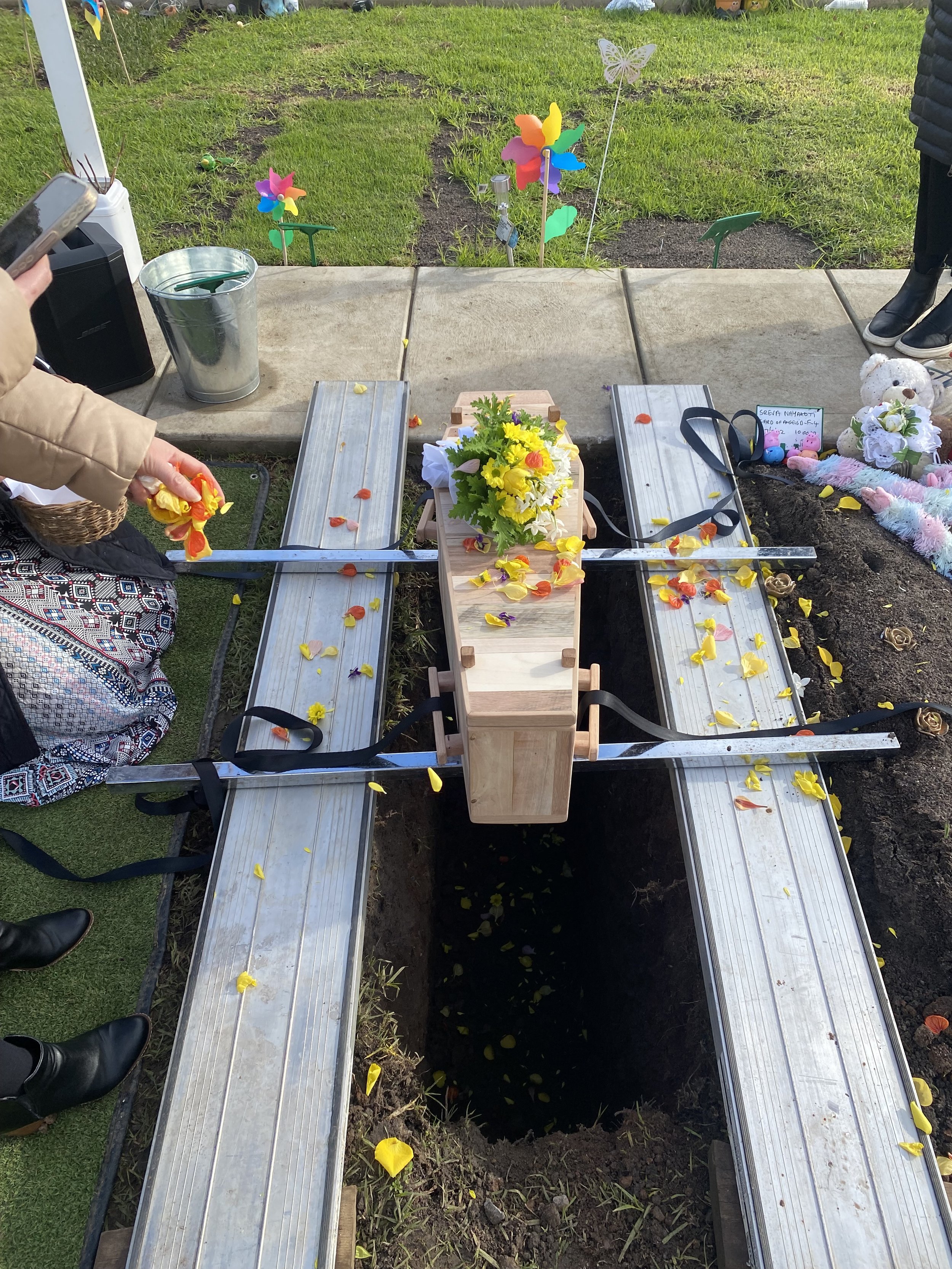
I have witnessed The Last Hurrah hold these families with care beyond expectation, the work they’ve done is inspiring - vigils, home ceremonies, family portraits. I’ve seen members of the team weave caskets, cradle these babies, and steady their families through the unimaginable. Recently, they made the decision to include a tender vigil in each baby package for free. This feels deeply important. A way of saying: this child existed. This grief is real. This family is seen.
While it is heartbreaking to face, the culture of hiding stillbirth away is not helping anyone.
Ashley Hudson